The Two Jobs of Every Cloud Generation
Every new wave of cloud infrastructure forces hyperscalers to solve two problems simultaneously: deploy more capable systems faster, and responsibly retire the hardware they replace. The first is visible to customers as performance gains. The second happens behind the scenes — but it directly affects cost efficiency, supply chain resilience, and sustainability.
Microsoft's approach starts at the silicon design stage and continues through years of operation. When equipment leaves active service, Circular Centers determine its next useful life. With new facilities in Newport, Wales, and Sydney, Australia, this network now spans North America, Europe, and Asia Pacific.
This analysis is based on Microsoft's official infrastructure report — see the source material for full details.
Getting More From Every Rack and Every Watt
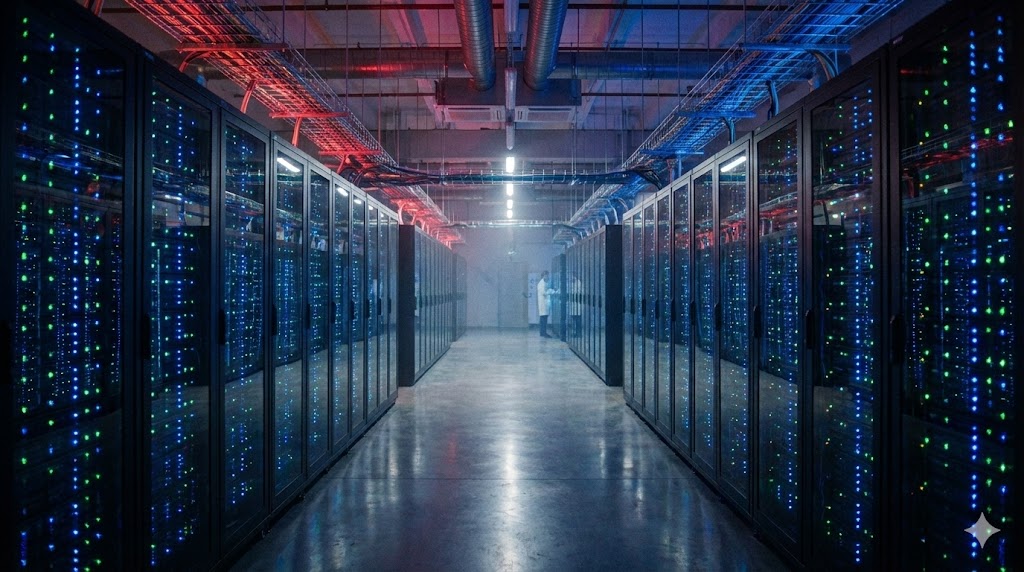
The core argument is simple: cloud infrastructure must increase compute capacity while making better use of space and power. Azure's data tells a striking story:
- Cores per rack increased approximately 13-fold since 2014
- Power required to complete the same task dropped by roughly 90%
- A workload like code compilation that consumed ~100W on early systems now runs on less than 10W
This density gain isn't just marketing — it's the foundation that lets Azure support AI demand without proportionally expanding datacenter footprint. Azure Cobalt, Microsoft's custom cloud processor, exemplifies this systems approach: Cobalt 200 delivers up to 50% higher performance than Cobalt 100 while integrating the latest security, networking, and storage technologies.
# Illustrating the efficiency gain concept (not actual Azure code)
def compute_efficiency_gain(old_watts: float, new_watts: float) -> float:
    """Calculate percentage reduction in power consumption."""
    return ((old_watts - new_watts) / old_watts) * 100

# Example: 100W -> 10W workload
reduction = compute_efficiency_gain(100, 10)
print(f"Power reduction: {reduction}%")  # Output: Power reduction: 90.0%
The takeaway: density and efficiency are not trade-offs — they compound.
Giving Hardware Its Next Useful Life
Last year, Microsoft reported a 92% reuse and recycling rate for decommissioned servers and components. But retiring a server at hyperscale is far more complex than sorting parts into bins. Each unit must be securely decommissioned, data-bearing components wiped, and then a decision made: can the complete system serve another purpose? Can processors and memory keep working elsewhere? Which materials return to the supply chain?
Circular Centers handle this triage:
| Disposition | Destination |
|---|---|
| Complete systems | Microsoft labs, training environments, schools, qualified buyers |
| Components | Spare parts for other systems |
| Materials | Recycled when reuse is no longer possible |
The network now operates eight centers across three continents, with a new facility planned for San Antonio, Texas. Microsoft is also investing in AI-powered automation — robotic disassembly and autonomous material handling — to accelerate recovery at scale.
Limitations and Caveats
- Recycling is not a silver bullet. A 92% rate still leaves 8% of material unaccounted for in the circular loop; true circularity requires design-for-disassembly from day one.
- Refurbished hardware has a performance ceiling. Reused components serve secondary workloads, not the high-density AI racks driving growth.
- Supply chain transparency remains a challenge. Tracking recovered materials back to original manufacturers is non-trivial at this scale.
- Energy savings claims are workload-dependent. The 90% figure applies to specific tasks; not all workloads scale linearly.
Next Steps for Learners
If this topic interests you, explore sustainable cloud architecture patterns, study datacenter lifecycle management frameworks, and look into circular economy certifications for IT asset disposition (ITAD).

The Bottom Line
Azure's Circular Centers represent a maturing of hyperscale operations: growth and responsibility are no longer opposing forces. Getting more compute from every rack and more value from every server is now a single engineering problem.
For developers and architects, the practical takeaway is that infrastructure choices have lifecycle consequences. Understanding how hardware is retired — and how cloud providers handle it — is part of building responsibly.