The conversation around agentic AI often gets stuck on models and prompts. But the real breakthrough happens when AI amplifies deeply human capabilities—like creativity and expertise—at an unprecedented scale. Pantone's journey to build an AI-powered color palette generator offers a masterclass in this shift. It underscores a critical, often overlooked truth: the sophistication of your AI agents is directly tied to the readiness of your data layer. You can explore the original case study that details this journey here.
The Architectural Blueprint: Multi-Agent Systems Meet Real-Time Data
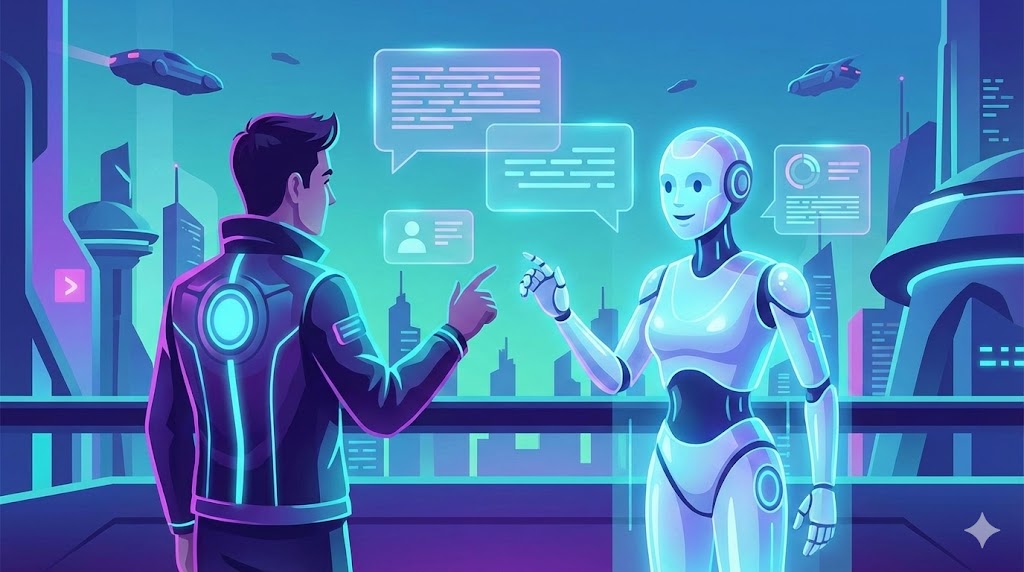
Pantone's Palette Generator isn't a simple chatbot. It's built on a multi-agent architecture, where specialized AI agents (like a 'chief color scientist' agent) collaborate. Each agent handles specific tasks: reasoning, retrieving context from Pantone's vast proprietary databases, and generating responses.
This design creates a dynamic, conversational experience. However, it imposes non-negotiable demands on the data layer:
- Real-time context: Agents need instant access to the entire conversation history and user preferences.
- Operational scale: The system must serve users globally with millisecond latency.
- Evolutionary flexibility: The data schema must adapt as AI workflows evolve (e.g., integrating vector search).
This is where Azure Cosmos DB became foundational. It wasn't just a storage choice; it was the real-time operational memory for the entire agentic system, storing chat history, prompts, and user interactions.
Critical Considerations and the Path Forward
While Pantone's results are impressive—thousands of chats across 140+ countries—their journey highlights essential considerations for any agentic AI project.
Limitations and Pitfalls:
- Prompt Sensitivity & Cost: Agentic systems can be resource-intensive. Each conversational turn may trigger multiple agent calls and database queries. Without careful design, costs can spiral, and latency can suffer.
- The Illusion of Understanding: While agents appear to 'understand' context, they are retrieving and reasoning over stored data. Gaps or biases in the underlying data will directly affect output quality.
- Orchestration Complexity: Managing the handoffs, state, and error handling between multiple agents is a significant engineering challenge beyond just choosing a database.
The Next Evolution: From Text to Vectors Pantone is already planning the next phase: moving from traditional text storage to vector-based workflows. This will allow for semantic search over color concepts and trends, further enhancing relevance. Azure Cosmos DB's support for vectorized data enables this evolution without a full system rewrite—a crucial advantage. This focus on resilient, data-driven systems mirrors the architectural philosophy behind other large-scale successes, such as the principles that enabled Netflix to achieve remarkable reliability in cloud deployments.

Key Takeaways for Your AI Projects
Pantone's story is a powerful blueprint. It teaches us that agentic AI is an architectural discipline, not just a modeling exercise.
- Start with Data, Not Just Models: An 'AI-ready' application requires an 'AI-ready' database. Prioritize real-time scalability, flexibility, and low-latency data access from day one.
- Build Tight Feedback Loops: Instrument your agents to log prompts, responses, and user interactions. This data, stored in your operational database, is fuel for continuous improvement.
- Plan for Evolution: Assume your AI patterns will change. Choose foundational technologies that support iterative development, from prompt engineering to vector embeddings.
Your Next Steps:
- Audit your current data infrastructure's ability to handle real-time, conversational state.
- Prototype a simple agentic workflow, focusing on the data persistence and retrieval layer.
- Explore tools that bridge AI orchestration and data, much like how modern CLI tools are evolving to integrate powerful AI models directly into developer workflows for high-frequency tasks.
By grounding AI ambitions in a solid data foundation, as Pantone did, you can build systems that don't just generate output—they understand, remember, and evolve with your users.