The $10B Question: Why Supply Chain Decisions Still Rely on Gut Feeling
Every week, NVIDIA's supply chain planners face a combinatorial nightmare: millions of parts, thousands of suppliers, and lead times that shift faster than a stock ticker. The goal is simple—minimize Time of Ownership (TOO), the clock from material arrival to finished sub-assembly. But the math alone doesn't cut it.
Planners juggle emails, weather forecasts, geopolitical risks, and years of tacit knowledge. That "instinct" often outperforms pure optimization. The challenge? Codifying that expertise so it scales, compounds, and survives employee turnover.
This is the story of how NVIDIA and Palantir turned human judgment into a fine-tuned 30B parameter model that now recommends allocations with 86.7% accuracy—beating a model 10x its size.
Key insight: On a bounded, domain-specific task, a specialized small model can outperform a general-purpose giant. The catch? You need a governed data layer and a feedback loop.
Check out how Microsoft is rethinking databases for AI agents to see a similar shift toward specialized AI infrastructure.
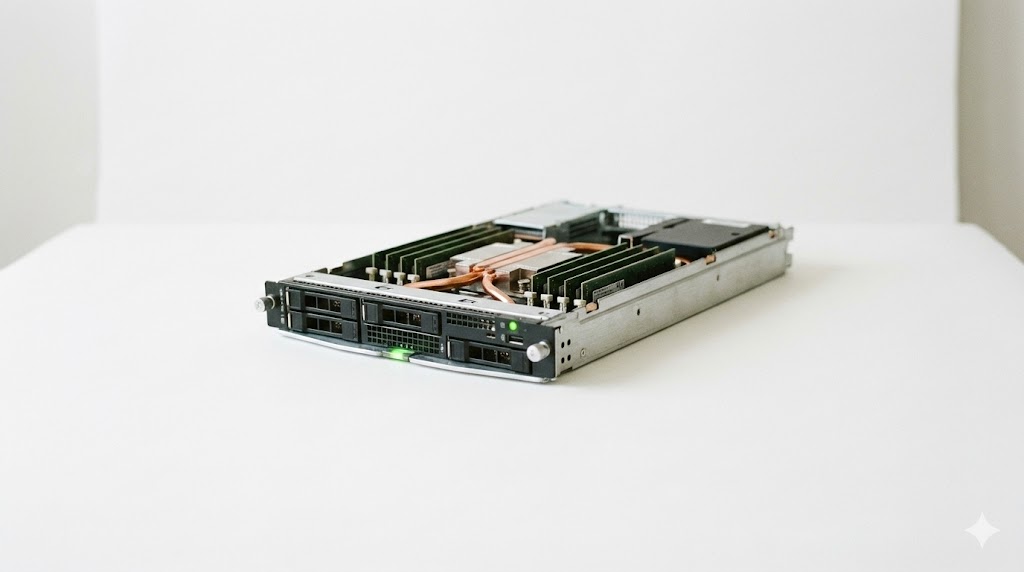
The Architecture: Ontology + cuOpt + Nemotron Flywheel
Step 1: Build a Governed Operational Layer (Palantir Foundry Ontology)
The Ontology isn't a table—it's a graph of objects and links representing materials, sites, commits, capacity, and qualitative signals. This unified view lets planners simulate scenarios and gives the AI a clean, governed input space.
Step 2: Solve the Quantitative Core with cuOpt
NVIDIA cuOpt formulates allocation as a mixed-integer linear program that minimizes TOO. It's GPU-accelerated and fast enough for what-if analysis. But cuOpt only sees hard constraints—it misses the human context.
# Pseudo-code: cuOpt allocation problem (simplified)
import cuopt

# Decision variables: allocation[site][material][week]
problem = cuopt.Problem()
problem.add_variables(sites, materials, weeks)
problem.set_objective("minimize", time_of_ownership)
problem.add_constraint("site_capacity", ...)
problem.add_constraint("material_availability", ...)
problem.add_constraint("customer_commits", ...)

solution = cuopt.solve(problem)
# Returns allocation + binding constraints (e.g., "Taiwan capacity")
Step 3: Capture Human Decisions and Outcomes
Every planner action—accept, edit, override—is logged with rationale, expected result, and actual outcome. This becomes the training data.
Step 4: Post-Train a Small, Open LLM (Nemotron 3.5 Lightning)
Why 30B parameters? Because smaller models learn faster, need less compute, and can be fine-tuned inside your own security boundary. The training pipeline:
- Anonymization with NeMo Anonymizer
- Synthetic data generation with NeMo Data Designer (to cover rare disruption scenarios)
- LoRA fine-tuning with NeMo AutoModel (freezes base weights, trains adapters)
- Point-in-time backtesting to evaluate against actual outcomes
# Simplified LoRA fine-tuning with NeMo
from nemo import AutoModel

model = AutoModel.from_pretrained("nvidia/nemotron-3.5-lightning")
model.add_lora(rank=16, alpha=32)  # Only train adapters
model.finetune(
    train_data="ontology_decisions.jsonl",
    eval_data="backtest_weeks.jsonl",
    epochs=3,
    gpus=2  # 2x B200, runs in minutes
)
Step 5: Deploy and Close the Loop
The model recommends an allocation range with rationale and risks. Planners review, override if needed, and the outcome feeds back into the Ontology—ready for the next training run.
Pro tip: The same record doubles as the evaluation harness. Replay each decision with only the information available at that time, hide the outcome, and compare model vs. human vs. reality.
Want to measure real user performance of your own AI features? Learn how to query speed insights directly from Vercel CLI.

Results and Caveats: Where Specialization Wins (and Loses)
Benchmark Comparison
| Model | Allocation Accuracy | Balanced Accuracy | Macro-F1 |
|---|---|---|---|
| Base Nemotron 3.5 Lightning (BF16) | 17.5% | — | — |
| Nemotron 3 Ultra (NVFP4) | 55.5% | 42.0% | 39.5% |
| Post-trained Lightning (BF16) | 86.7% | 58.6% | 57.5% |
The post-trained 30B model beats the 10x larger Ultra by 31.2 percentage points on accuracy. But here's the nuance:
- Balanced accuracy and Macro-F1 matter because constrained supply means planners cut allocations far more often than they raise them. Plain accuracy would flatter a majority-class guesser.
- Future production risk forecasting remained difficult even after fine-tuning. Specialization improved the decision task but didn't solve every prediction problem.
Critical Limitations
- Data dependency: The flywheel only works if you have a governed operational layer capturing decisions and outcomes. Without it, you're training on noise.
- Domain shift: The model is specialized for allocation. It won't generalize to unrelated supply chain tasks without retraining.
- Human-in-the-loop required: The model recommends; humans decide. Over-trusting the model without review can lead to costly errors.
- Compute boundary: While training is light (2x B200 for minutes), you still need GPU access and a secure environment for proprietary data.
Warning: Don't skip the backtesting step. Without point-in-time evaluation, you risk deploying a model that looks good on paper but fails in production.
Next Steps for Learners
- Experiment with open-weight models: Start with Nemotron 3.5 Lightning on Hugging Face and try LoRA fine-tuning on your own domain data.
- Study decision optimization: Learn mixed-integer linear programming and tools like cuOpt to understand the quantitative backbone.
- Build a feedback loop: Even a simple spreadsheet capturing decisions and outcomes can be the seed for institutional knowledge.
- Explore sovereign AI: If you handle sensitive data, investigate on-premises or private cloud deployments for fine-tuning and inference.
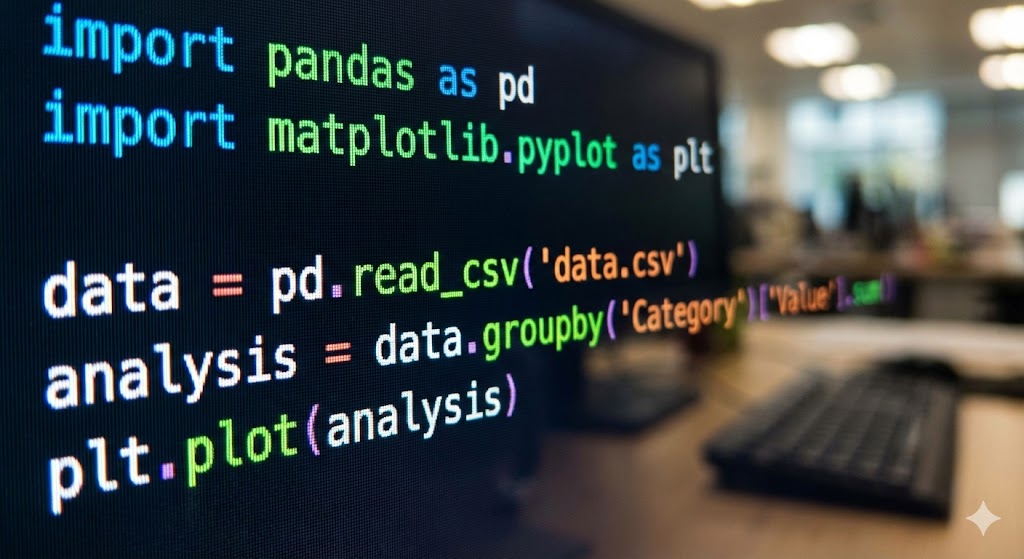
The Bigger Picture: A Supply Chain That Learns
NVIDIA's approach isn't just about semiconductors. Any operation where critical capacity is allocated by experienced people working from fragmented signals can run the same flywheel:
- Governed operational layer (Ontology)
- Decision capture (rationale + outcome)
- Open model post-training (inside your compute boundary)
The result compounds: planners spend less time on routine decisions, expertise becomes institutional knowledge, and onboarding accelerates. This is how the world's most reliable AI infrastructure supply chain learns faster than it grows.
Final thought: The future isn't just bigger models—it's smarter feedback loops. Specialized small models, trained on your own data, inside your own walls, can outperform general-purpose giants on bounded tasks. That's sovereign AI in practice.
Related reads:
- Microsoft's 2026 Database Vision: Unified Data, AI Agents, and the New Fabric Hub
- Stop Guessing: Query Real User Performance Metrics Directly from Your Vercel CLI
Source: NVIDIA Developer Blog