The Broadcast Model of AI Agents
Imagine watching the Olympics. You don’t see the dozens of camera operators, replay directors, and data analysts working in perfect sync behind the scenes. You just see the event. That’s the vision Microsoft is chasing with its latest agentic push: many specialized AI agents, one unified team, with humans in control.
This week, Microsoft announced a suite of new agents under Azure Copilot and GitHub Copilot, designed to tackle the biggest bottleneck in enterprise cloud adoption: modernization. According to Forrester’s Q1 2026 Cloud and AI Application Modernization Survey, 91% of IT leaders see application modernization as necessary for enabling AI advancements. Yet most organizations still rely on disconnected tools and months of manual planning.
The answer? Agentic workflows that operate in parallel across discovery, assessment, planning, migration, and code transformation. Let’s break down what’s new and why it matters.
Azure Copilot Migration Agent (Public Preview)
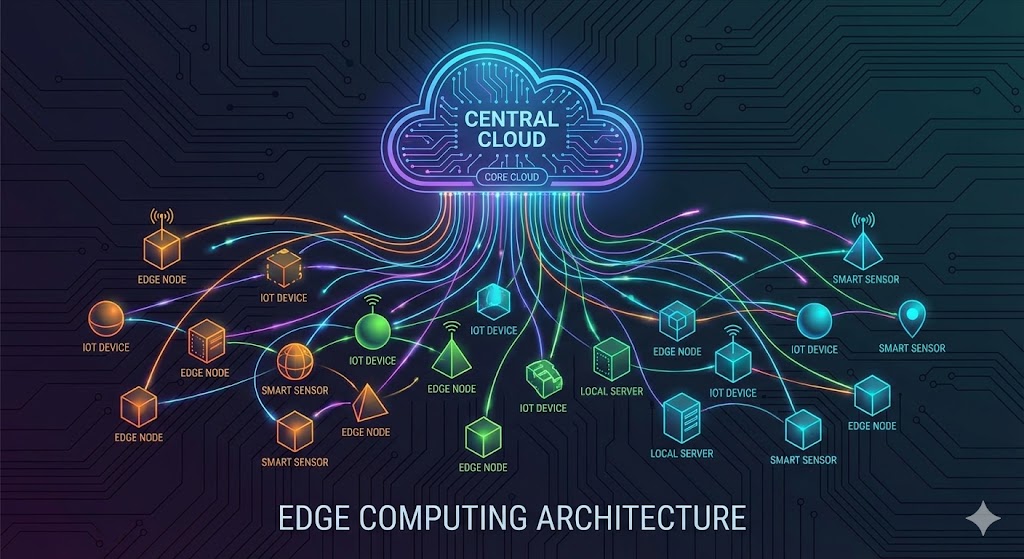
The star of the announcement is the Azure Copilot migration agent — now in public preview. This agent embeds AI across the entire migration lifecycle: discovery, assessment, planning, and deployment. It turns migration from a one-time project into a continuous modernization motion.
How it works:
- The agent ingests existing inventory data (servers, VMs, databases, dependencies).
- It produces a data-driven plan in minutes — work that used to take months.
- It surfaces cost insights, dependency maps, and prioritization recommendations.
Key benefit: IT and developer teams finally share a single, connected workflow. No more silos.
GitHub Copilot Modernization Agent (Public Preview)
On the code side, GitHub Copilot’s new modernization agent acts as an orchestrator. It can:
- Run multiple code assessments simultaneously.
- Build unique modernization plans for each application.
- Execute automated framework and runtime upgrades (.NET, Java).
- Deploy directly to Azure.
Real-world impact: One customer reduced total modernization effort by 70% using automated .NET and Java upgrades.
The Multi-Agent Integration
The real magic happens when these agents work together. GitHub Copilot scans application code and produces detailed code assessment reports. Azure Copilot ingests those reports to surface code-level issues, warnings, and insights — connecting developer-driven modernization with cloud infrastructure planning.
Example workflow:
# Pseudocode for agent orchestration
from azure_copilot import MigrationAgent
from github_copilot import ModernizationAgent

# Step 1: Discovery
migration_agent = MigrationAgent()
inventory = migration_agent.discover_assets(
    scope=["servers", "vms", "databases"]
)

# Step 2: Code Assessment
modernization_agent = ModernizationAgent()
code_reports = modernization_agent.assess_applications(
    repos=["app1", "app2", "app3"],
    target_frameworks=[".NET 8", "Java 21"]
)

# Step 3: Integrated Planning
combined_plan = migration_agent.integrate_code_reports(
    code_reports
)
print(f"Migration plan ready: {combined_plan.estimated_effort_hours} hours")
This is the first time we see a true multi-agent, cross-product integration between Azure and GitHub Copilot.
Why Your Database Is Critical
Modernizing apps is only half the journey. Your AI strategy is only as strong as your data strategy. Fragmented or legacy databases create a ceiling for even the most sophisticated agentic workflows.
Microsoft’s recommendation: move to Azure managed database services (Azure SQL, Cosmos DB, PostgreSQL) to:
- Transfer operational burden to a platform built for scale.
- Enable native AI capabilities (semantic search, memory integration, model invocation).
- Keep AI models grounded in real-time, trusted business signals.
Limitations and Caveats
- Agent maturity: Both agents are in public preview. Expect breaking changes, limited SLAs, and evolving documentation.
- Vendor lock-in risk: Deep integration with Azure and GitHub ecosystems makes multi-cloud strategies harder.
- Human oversight still required: Agents can automate 70% of the work, but complex decisions (e.g., refactoring architecture) need human validation.
Next Steps
- Try the Azure Copilot migration agent in public preview.
- Explore GitHub Copilot modernization capabilities for .NET or Java applications.
- Watch the Microsoft Azure Summit livestream (March 12, 2026 for Asia/Europe; April 23, 2026 for Americas) for live demos.
Together with Related Content
For a deeper look at how these AI agents compare with the broader shift toward conversational observability, check out our guide on Architecting Conversational Observability: Building an AI-Powered Troubleshooting Assistant for Kubernetes. And if you’re wondering how frameworks are evolving beyond the hype, don’t miss Beyond the Framework Hype: Key Takeaways from a 2025 Dev Summit.
Conclusion: The Future Is Agentic, Connected, and Human-Led
Microsoft’s announcement signals a clear direction: modernization is no longer a project — it’s a continuous, agent-driven process. By pairing Azure Copilot and GitHub Copilot, they’ve created a model where infrastructure and code teams operate from the same playbook.
Customer results like Ahold Delhaize — who reduced complexity and accelerated delivery using these agentic tools — prove the model works.
Your move: Start small. Pick one legacy application or database. Run a discovery with the agent. See how fast a conversation can replace a month of planning. The broadcast has already begun.