Why Industrial AI Needs a New Kind of Platform
Most edge AI hardware today falls into two camps: consumer-grade developer kits (great for prototyping, poor for production) or ruggedized PLCs (safe, but compute-limited). NVIDIA's IGX Thor family aims to eliminate that trade-off.
Industrial and medical systems now run generative AI models for real-time tasks: factory automation cells analyzing video streams, autonomous mobile robots fusing lidar and camera data, surgical rooms running AI-assisted navigation. These environments demand deterministic behavior, high availability, and verifiable functional safety—requirements that typical edge GPUs can't meet.
IGX Thor is NVIDIA's answer: an enterprise-ready platform that combines server-class AI performance (up to 5,581 FP4 TFLOPS) with industrial-grade hardware, extended lifecycle support (10 years), and compliance with ISO 26262 and IEC 61508 safety standards.
This post breaks down the IGX Thor family, its performance benchmarks, safety architecture, and how it compares to the previous IGX Orin generation.
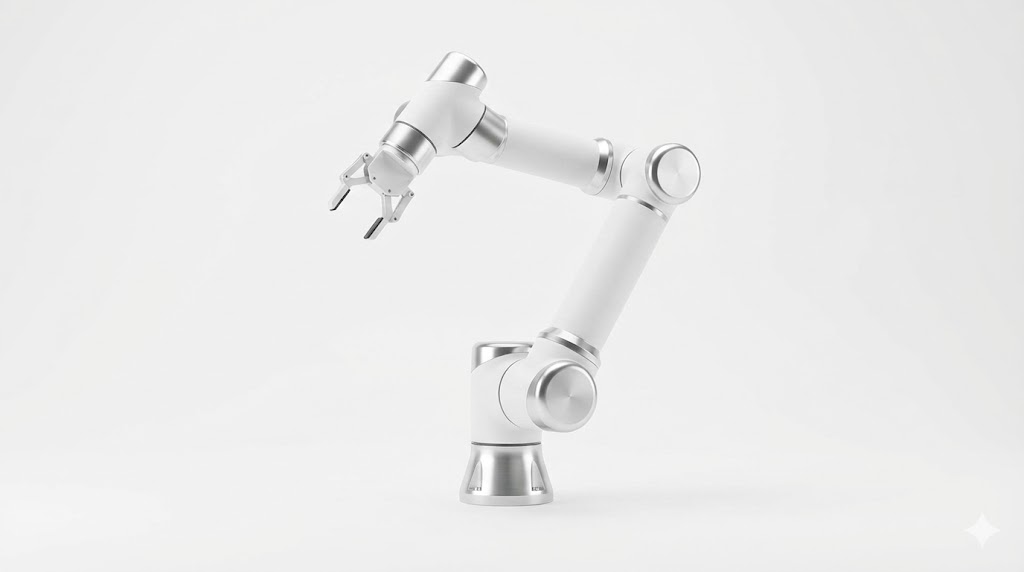
IGX Thor Family: Four Flavors for Different Edge Workloads
NVIDIA offers four IGX Thor configurations, each tuned for specific deployment scenarios:
| Model | AI Performance (FP4) | Key Feature | Best For |
|---|---|---|---|
| IGX T5000 SoM | Up to 2,070 TFLOPS | Compact embedded module, 128 GB LPDDR5x | Custom carrier boards, space-constrained robots |
| IGX T7000 Board Kit | Up to 5,581 TFLOPS | MicroATX, RTX PRO 6000 dGPU, dual 200 GbE | High-throughput sensor fusion, smart retail |
| IGX Thor Developer Kit | Up to 5,581 TFLOPS | Full-featured dev platform, ConnectX-7 | Prototyping and validation |
| IGX Thor Developer Kit Mini | Up to 2,070 TFLOPS | Smaller footprint, on-board safety module | Mobile robots, compact industrial systems |
Performance Leap Over IGX Orin
Compared to the previous IGX Orin generation, IGX Thor delivers:
- Up to 8x higher AI compute on integrated GPU
- 2.5x higher AI compute with discrete GPU acceleration
- 2x higher networking bandwidth (200 GbE vs 100 GbE)
Benchmark results (Qwen3 32B model, RTX PRO 6000 Blackwell Max-Q dGPU):
# IGX T7000 vs IGX Orin 700 — LLM Inference Throughput
# Configuration: dGPU, NVFP4 (T7000) / W4A16 (Orin), VLLM framework

Model               | T7000 (tok/s) | Orin 700 (tok/s) | Speedup
Qwen3 30B A3B       | 1,163         | 807              | 1.4x
Qwen3 32B           | 468           | 95               | 4.9x
Nemotron 9B V2      | 306           | 202              | 1.5x
Cosmos Reason 2 8B  | 822           | 540              | 1.5x
gpt-oss-20B         | 1,072         | 711              | 1.5x
High-Speed Connectivity for Real-Time Workloads
The IGX T7000 board kit introduces dual 200 GbE networking via NVIDIA ConnectX-7 SmartNIC with RDMA. This allows sensor data (cameras, lidar, radar) to bypass the CPU and flow directly into GPU memory—critical for deterministic, low-latency sensor fusion pipelines.
Combined with NVIDIA Holoscan Sensor Bridge (HSB), IGX Thor can aggregate massive multisensor streams without packet loss, enabling tighter synchronization and higher-fidelity AI inference.
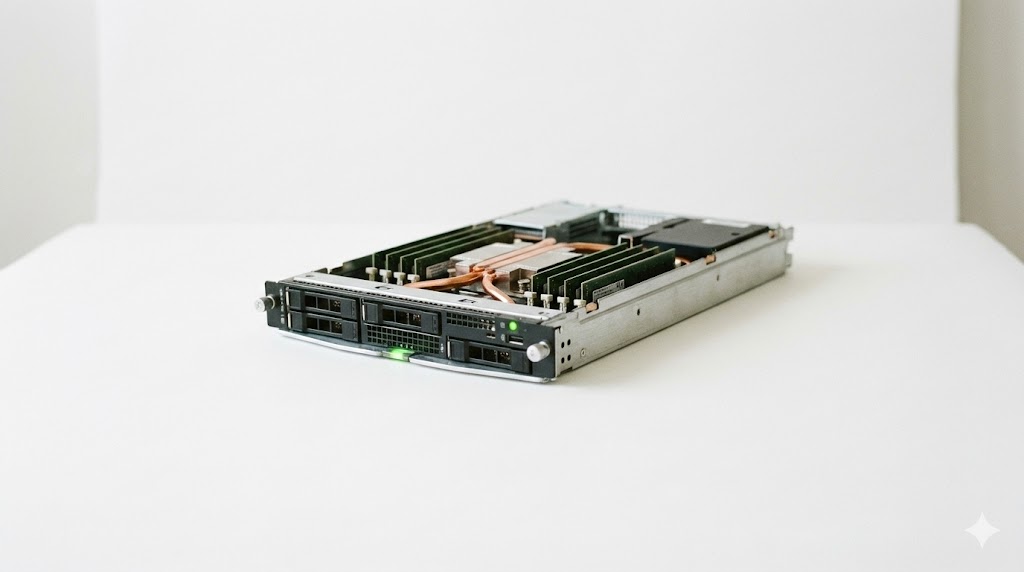
Built-In Functional Safety: ASIL D / SC3 Compliance
IGX Thor is the first NVIDIA edge platform to unify high-performance AI and functional safety in a single SoC. Key safety features:
- Functional Safety Island (FSI): An independent, redundant safety processor that monitors and handles safety-critical workloads, providing hardware separation between safety and non-safety domains.
- Hardware fault detection, safe-state monitoring, in-system test
- DRAM ECC (error-correcting code) enabled without performance penalty
- Multi-Instance GPU (MIG): Partition the Blackwell GPU into isolated instances, so safety-critical tasks get hard performance guarantees even alongside lower-priority workloads.
- Real-time Linux kernel shipped by default for deterministic control loops.
NVIDIA also operates the Halos AI Systems Inspection Lab (ANAB-accredited) to help IGX customers meet rigorous safety and cybersecurity standards through impartial assessments.
Ruggedized for Industrial Reality
- Industrial-grade components (extended temperature, shock/vibration compliance)
- 10-year lifecycle with security updates and full-stack maintenance
- Rich I/O: PCIe Gen5, SFP+, CAN, high-speed digital interfaces
Seamless Transition from Jetson Thor
Jetson T5000 and IGX T5000 are pin-compatible and share the same form factor, so the same carrier board works for both. Software stacks are aligned (kernel, user space, AI libraries), and NVIDIA is introducing JetPack on IGX for teams needing deeper customization.

Limitations and Considerations
- Power and cooling: The IGX T7000 with dGPU draws significantly more power than Jetson modules. Proper thermal management is essential for deployment in enclosed industrial cabinets.
- Cost: Enterprise-grade components and 10-year support come at a premium. IGX Thor is not a replacement for low-cost edge devices like Raspberry Pi or Jetson Nano.
- Software maturity: The real-time Linux kernel and safety-certified stack are still evolving. Early adopters may encounter driver or compatibility issues with custom sensor drivers.
- Ecosystem lock-in: Deep integration with NVIDIA's software stack (CUDA, TensorRT, Holoscan) means teams already invested in NVIDIA tooling will benefit most.
Next Steps for Developers
- Start with the Developer Kit: IGX Thor Developer Kit is available from distributors worldwide. Use it to prototype your industrial AI pipeline.
- Explore the safety documentation: Review the IGX Thor Safety Product Brief for certification guidance.
- Test migration from Jetson: If you're already on Jetson Thor, the pin-compatible design makes the transition straightforward.
- Join the community: NVIDIA GTC 2026 keynotes and sessions offer deep dives into real-world IGX Thor deployments.
For further reading, check out our piece on how advanced browsing protection checks URLs without compromising privacy and the broader infrastructure implications in Azure's AI datacenters built for NVIDIA's Rubin platform.